Copper Pipe Corrosion and Slab Leaks
Corroding copper lines are a leading cause of slab leaks. See how pinholes form, what hard water adds, and what repair options exist for buried pipes.
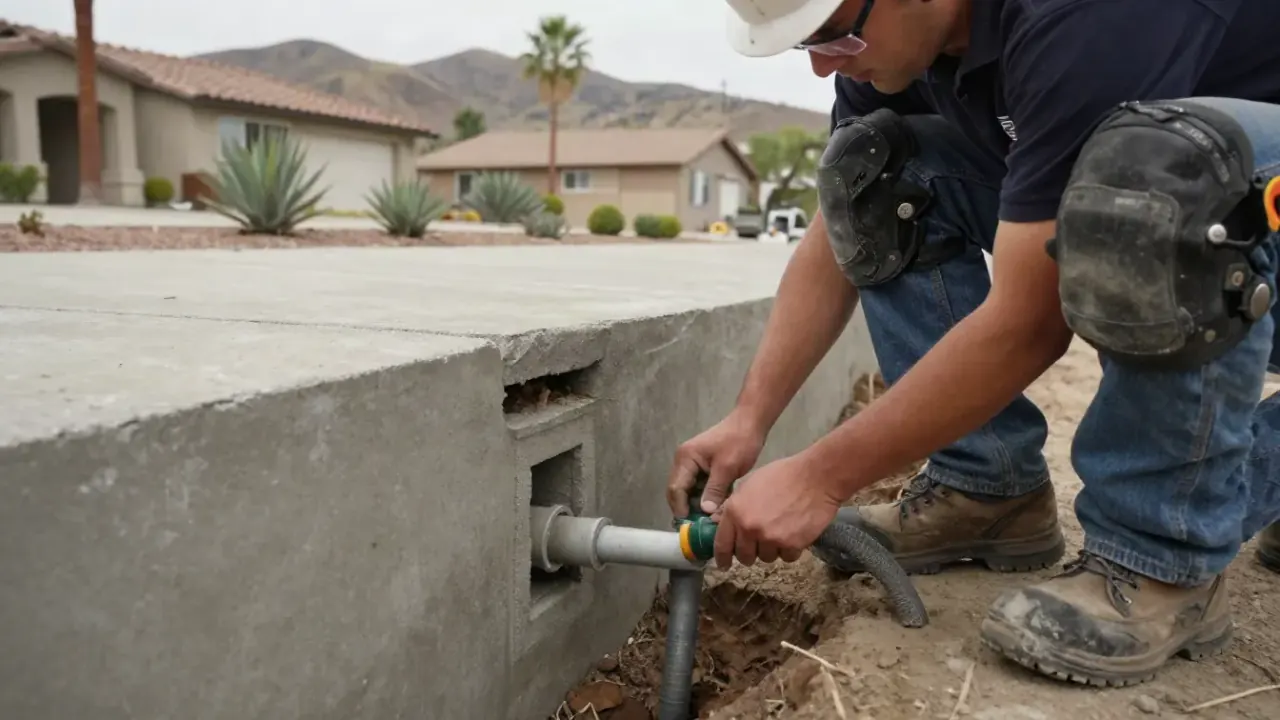
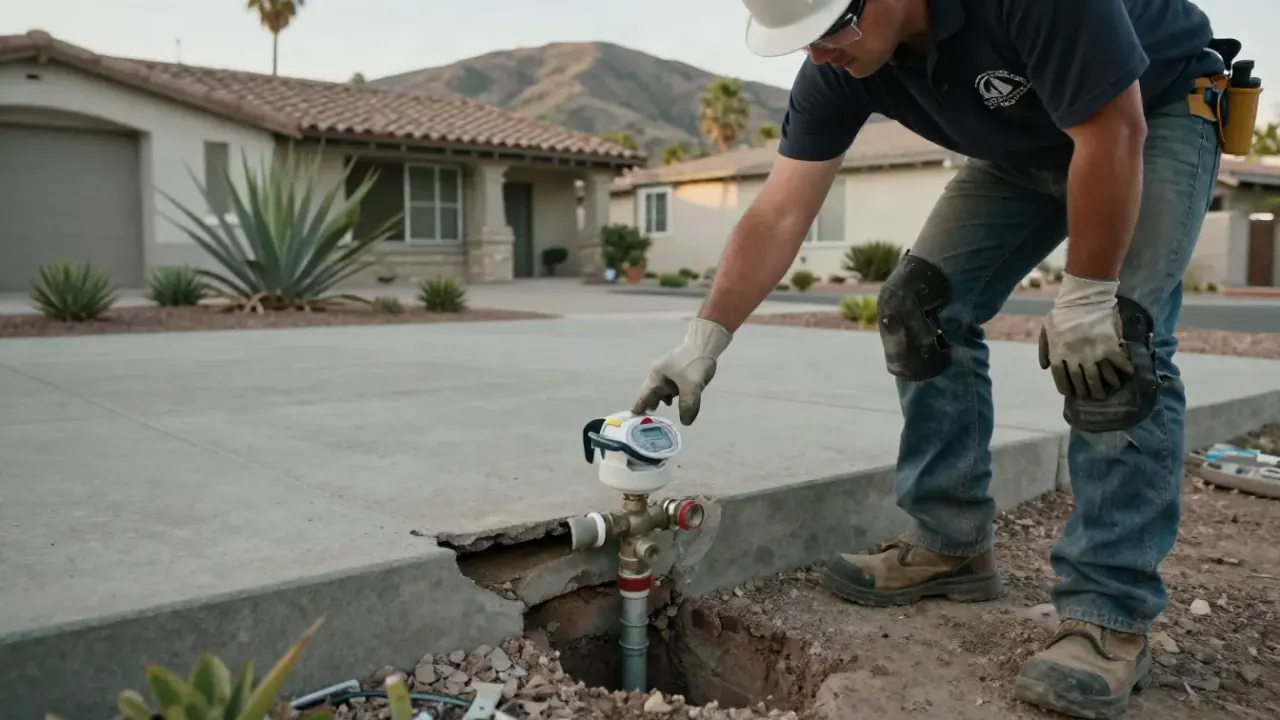
Copper pipe corrosion causes slab leaks by thinning the pipe wall until a pinhole opens, and it is one of the leading reasons buried water lines fail. The damage is slow and quiet. A copper line can look fine for years and then start leaking at a single weak spot under the concrete. In Tustin, where many homes have copper plumbing running beneath a slab, understanding corrosion helps you read the warning signs early. This post explains how corrosion works, what speeds it up and how repair choices change when the problem is the pipe material itself.
How does copper pipe corrosion lead to a slab leak?
Copper pipe corrosion leads to a slab leak when the metal wears away and water escapes through a thin spot into the concrete and soil around the line. Because the pipe is buried, there is no drip to see, only the effects.
A slab leak is a leak in a water line running under or within a home's concrete foundation, and corrosion is behind many of them. Other causes include friction between pipes and concrete, shifting soil and incorrectly built foundations. But corrosion is the one that works from the inside out and the outside in at the same time.
Once the wall is thin, water pressure inside the line finds the weak point and widens it. A pinhole becomes a steady leak.
What speeds up copper corrosion?
Several conditions speed up copper corrosion, and in Orange County hard water is one of the most discussed. Mineral-heavy water can accelerate corrosion over time, and it also leaves scale that adds strain to lines and fixtures.
Other contributors include:
- Heat. Hot water lines wear faster, and they account for a large share of slab leaks.
- Contact with surrounding materials. Concrete and other materials touching the pipe can attack its outer surface.
- Movement. Pipes expand and contract with temperature, rubbing against the slab.
- High water pressure. Many sources cite roughly 40 to 60 psi as a normal range. Check yours with a gauge.
No single factor decides the outcome. Most failures come from a few of these working together over years.
Why do pinholes form where they do?
Pinholes form where the pipe is under the most stress or exposed to the harshest conditions, usually at bends, fittings and contact points. The metal is simply thinner or more strained at those places.
A fitting changes the direction of flow and concentrates turbulence, which wears the wall. A spot where a pipe presses against concrete or another pipe rubs the surface every time the line moves.
That is why a plumber looks beyond the one point where water is coming out. If one spot has failed, others along the same line may be close behind. The pipe tells a story, and a video inspection can read it.
In neighborhoods such as Slab Leak Repair in Columbus Grove, the right approach starts with learning how much of the line is affected before deciding on a fix.
Warning signs of corroding pipes under the slab
The warning signs of corroding pipes under a slab are the same as for any slab leak: indirect symptoms that show up once water is escaping. Corrosion itself is invisible, so these clues are your best signal.
- A higher water bill with no visible leak.
- A meter that moves with every fixture off.
- Low pressure.
- Warm spots on the floor.
- Damp carpet or a mildew smell.
- Buckling floors or cracks in walls and baseboards.
- The sound of running water.
You may also see small signs elsewhere in the house, such as blue-green staining around fixtures or on exposed copper, which can point to copper wearing.
Check the meter first. It takes a couple of minutes and answers the biggest question: is water leaving the house when nothing is running?
Can corroded copper be repaired or does it need replacing?
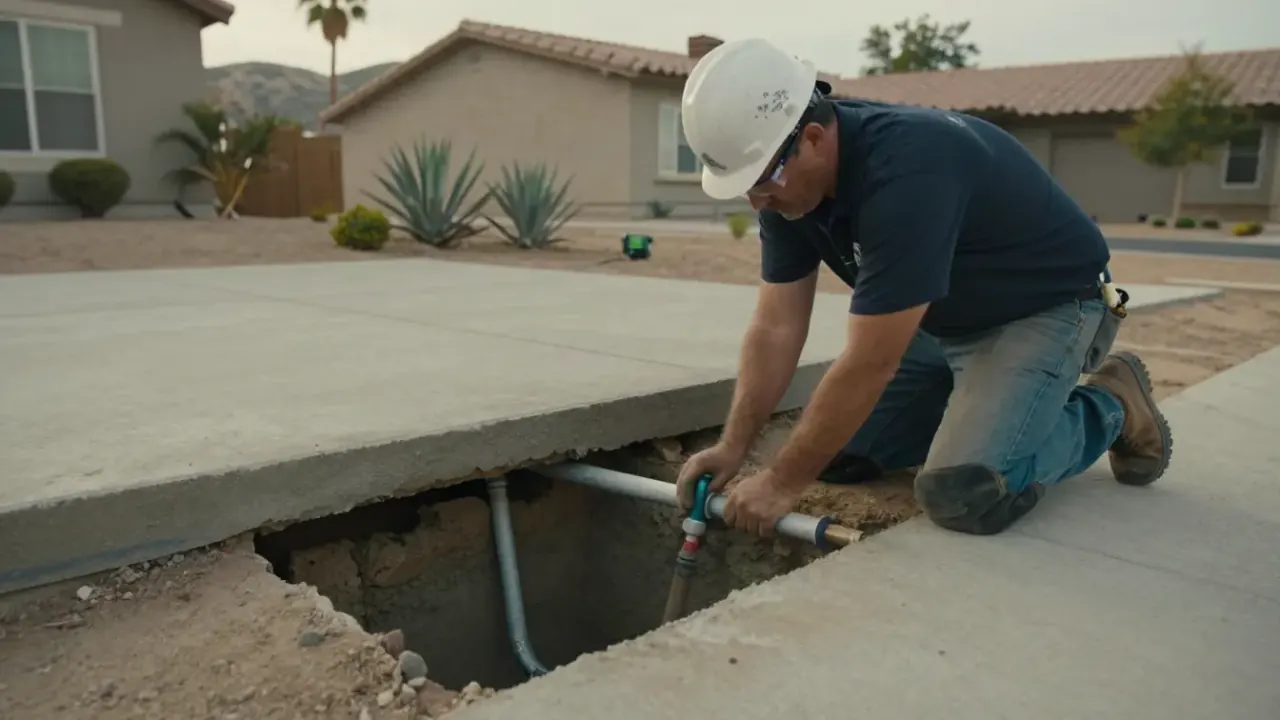
Corroded copper can be repaired when the damage is limited to one section, and it needs to be replaced or rerouted when the corrosion is widespread. The deciding factor is how much of the line is weakened.
For a single failed stretch, Copper Pipe Repair in Tustin may be enough. For a pipe that is still sound overall but leaking, epoxy lining can coat the inside, though it needs a pipe that has not collapsed.
When there are multiple leaks or the pipes are aging, rerouting through walls or the attic is often the better fit. It avoids the slab but means drywall work. In the most worn systems, Whole-House Repiping in Tustin replaces the problem at its source instead of patching it spot by spot.
Typical slab leak repair runs roughly $630 to $4,400, with severe or hard-access jobs up to about $6,750, according to This Old House. Angi puts the average at about $2,300. Those are typical 2026 figures. Whole-system work can fall outside them, so get a plan based on your own pipes.
Common mistakes with corroding copper
Common mistakes with corroding copper include treating the first leak as the only one, ignoring pressure and using chemical cleaners that harm pipes. These lead to repeat repairs.
- Fixing one pinhole in a worn line. Another may follow soon.
- Skipping detection. Acoustic listening, thermal imaging, pressure testing and video inspection show the extent of the problem.
- Using harsh chemical drain cleaners. They can attack pipes and add to the wear.
- Ignoring hard water. Scale and mineral content affect pipes and the water heater.
- Waiting on a rising bill. Leaks get larger, not smaller.
Hillside homes, like those near Slab Leak Repair in Panorama Heights, can combine corrosion with shifting soil, which adds stress on already thin pipe. Mention any cracks or settling when you talk to a plumber.
When to call a professional
You should call a professional when you see two or more slab leak signs or when a water bill climbs with no obvious reason. Corrosion will not reverse on its own, and the longer water escapes, the more it affects flooring and the slab.
Shut off the main water valve if water is actively escaping, photograph the damage for your insurer and call your insurer. Tustin Slab Leak Repair can find the leak, inspect the line and explain whether a spot repair, lining, rerouting or broader replacement fits.
Bring what you know: the age of the plumbing if you have it, when the bill began to rise and where the floor feels warm.
Frequently Asked Questions
Does copper always corrode eventually?
Not on a fixed schedule. Corrosion depends on water chemistry, heat, movement and contact with surrounding materials. Some copper lasts a long time, while hard water and hot lines can speed wear.
What is a pinhole leak?
It is a tiny hole in the pipe wall, usually from corrosion or abrasion. Under a slab it leaks silently, so a rising bill or warm floor spot is often the first clue.
Does hard water damage copper pipes?
It can. Hard water can accelerate copper corrosion in Orange County, and scale adds strain. Water treatment is one prevention step to discuss with a plumber.
Can corroded pipes be fixed without breaking the slab?
Often. Lining, tunneling and rerouting can avoid cutting the slab, depending on pipe condition and leak location. Each has limits, so ask which fits your layout.
When is repiping the better choice?
When corrosion is widespread or leaks keep returning. Replacing the system can make more sense than repeated spot repairs, though it is a larger project and cost.
Get help with Slab Leak Repair in Tustin
If you suspect corroding copper under your slab, a clear diagnosis comes first. Call Tustin Slab Leak Repair at (657) 359-9075.